


By Asuquo Cletus
The Cross River State Government has unveiled a comprehensive plan aimed at strengthening data quality and promoting evidence-based decision-making across ministries, departments and agencies.
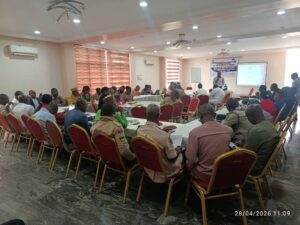
The initiative was presented on Tuesday during a validation workshop on the Draft Cross River State Strategy for the Development of Statistics (SSDS) 2026–2030, held in Calabar.
Representing the Governor of Cross River State, Bassey Otu, the Vice Chairman and Chief Executive Officer of the State Planning Commission, Bong Duke, said the move underscored the administration’s commitment to strategic planning, transparency and sustainable development.
He stressed that reliable data and sound statistics were critical to effective governance, noting that governments globally were increasingly judged by measurable results rather than promises.
“Strong statistical systems are indispensable to good governance, accountability, prudent resource allocation and sustainable development,” Duke said.
He added that the new strategy would provide a roadmap for improving data production, coordination among institutions, and modernising information systems to meet emerging development needs.
According to him, the plan will also support government efforts to respond effectively to economic pressures, infrastructure demands, employment challenges and social welfare needs.
Duke commended the Cross River State Bureau of Statistics for driving the process and urged stakeholders to contribute practical recommendations to ensure the strategy is implementable.

He reiterated the commitment of the Otu-led administration to data-driven governance, noting that the State Planning Commission would continue to support reforms that strengthen institutional planning frameworks.
Also speaking, the Statistician-General of the state, Akedoh Edet, described the strategy as a critical reform agenda designed to reposition statistics as a key tool for governance, investment planning and public accountability.
Akedoh said the document would guide how the state produces, manages and utilises data over the next five years, adding that it would strengthen administrative data systems, improve coordination, and promote innovation in data management.
She noted that the previous statistical master plan, which ended in 2017, required an update to reflect current realities such as digital transformation, population growth and the need for real-time data.
“This strategy is not merely a document but a practical framework that will guide data production, coordination and utilisation in Cross River State,” she said.
Edet emphasised the importance of stakeholder participation, describing the validation process as essential to ensuring ownership, credibility and effective implementation of the strategy.
He also acknowledged the support of development partners and other stakeholders in advancing statistical development and capacity building in the state.
The validation workshop is expected to produce a final strategy that will serve as a blueprint for strengthening the state’s statistical system and improving service delivery through informed policy decisions.
Participants at the workshop included representatives of government agencies, development partners, academia, civil society organisations and private sector actors, who are expected to review and enrich the draft document.
