

By Daniel Agbor
The Livelihood Improvement Family Enterprise for the Niger Delta (LIFE-ND) Project has recorded a landmark achievement in Cross River State, generating a total gross income of ₦5,547,532,882 across its agricultural value chains, in what stakeholders now describe as a catalytic boost to both the state and national economy.
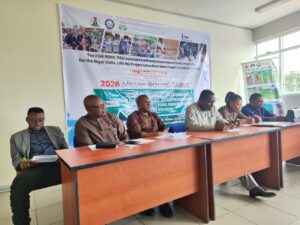
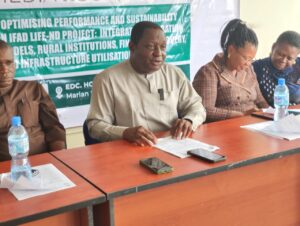
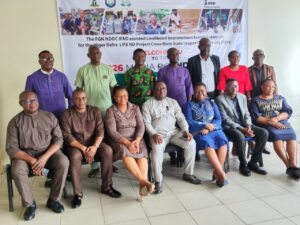
The State Project Coordinator, Dr. Innocent Ogbin, disclosed this during the 2026 Media Roundtable held on Thursday, April 2, 2026, at Prof. Eyo Ita House in Calabar, where a comprehensive review of the project’s performance was undertaken as it transitions from its initial six-year phase into an Additional Financing window.
Providing an overview, Ogbin revealed that the project has facilitated the creation of 4,370 direct jobs, with a strong emphasis on inclusivity. Of this figure, 2,009 positions are held by women, including 398 female-headed households, while 196 persons with disabilities have also been integrated into productive economic activities, reflecting a deliberate alignment with social protection and equitable growth objectives.
Beyond job creation, the LIFE-ND intervention has significantly redefined agribusiness as a viable economic driver, strengthening agricultural value chains and promoting market-oriented family enterprises. With agriculture forming the backbone of Cross River State’s economy, the project’s outcomes are already translating into increased rural productivity, improved household incomes, and a gradual shift from subsistence farming to enterprise-based agriculture.
At the core of this transformation is the incubator–incubatee model, a structured agribusiness framework that pairs experienced agripreneurs with emerging trainees. Through this system, knowledge transfer, enterprise discipline, and risk-sharing mechanisms are institutionalised. No fewer than 630 beneficiaries have completed incubation and are now positioned for enterprise take-off, forming a new generation of agribusiness entrepreneurs equipped with practical skills, market knowledge, and financial literacy.
Complementing this model, 2,996 agribusiness operators were supported under business development services, strengthening their capacities in planning, bookkeeping, and market integration. This approach underscores the fundamental ingredients of agribusiness success, including access to land, finance, knowledge, infrastructure, and markets, all of which the project has systematically addressed.
To tackle structural bottlenecks, particularly poor rural access, the project facilitated the construction of 27.7 kilometres of roads and culverts, easing the movement of farm produce and reducing post-harvest losses. In addition, over 1,100 hectares of farmland were developed, while 2,769 beneficiaries were integrated into savings groups, and more than 2,500 participants accessed over ₦28 million in credit, further stimulating rural enterprise growth.
Institutional strengthening has also been a major outcome, with the establishment of 184 producer organisations, 178 enterprise groups, and 97 formally registered agribusinesses. These structures are critical for aggregation, value addition, and improved bargaining power within the agricultural ecosystem.
The broader economic implications of these achievements extend beyond Cross River State. By boosting local production, enhancing food systems, and stimulating rural economies, the LIFE-ND Project contributes to Nigeria’s drive for economic diversification away from oil dependency. Increased agricultural output feeds into national supply chains, stabilises food prices, and supports agro-industrial linkages, thereby reinforcing the role of agriculture as a pillar of sustainable economic growth.
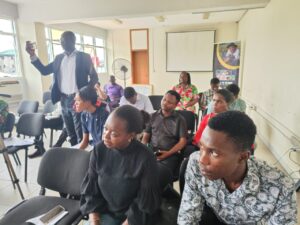
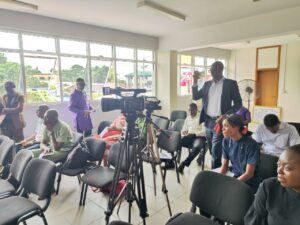
Technical sessions at the roundtable provided deeper insights into the project’s multidimensional impact. Heads of departments across Agribusiness, Gender, Finance, Nutrition, and Infrastructure presented detailed reviews, highlighting progress, lessons learned, and areas requiring scale-up. The gender unit, in particular, emphasised the transformative effect of women’s economic inclusion, while the nutrition desk underscored improvements in household dietary practices linked to increased farm productivity and income.
In the same vein, financial experts pointed to improved credit culture and savings mobilisation among beneficiaries, while infrastructure specialists highlighted the critical role of rural access in unlocking agricultural value chains. These sessions collectively painted a picture of an integrated development model where economic, social, and infrastructural elements are mutually reinforcing.
A high-level panel discussion featuring technocrats and development experts further enriched the discourse, offering strategic perspectives on addressing existing challenges. Key recommendations centred on strengthening collaboration among stakeholders, deepening public-private partnerships, and leveraging innovation, particularly in the application of artificial intelligence for precision agriculture, market forecasting, and extension services.
Participants agreed that sustaining the gains of the LIFE-ND Project would require deliberate policy alignment, continuous capacity building, and adaptive financing models capable of scaling agribusiness enterprises across the Niger Delta and beyond.
As the project enters its additional financing phase, expectations remain high that its incubator-driven, value chain-focused approach will not only consolidate existing gains but also position Cross River State as a leading hub in Nigeria’s evolving agribusiness landscape.