

By Asuquo Cletus
The Cross River State Government has joined forces with development partners and financial institutions to address persistent funding gaps in the state’s water, sanitation, and hygiene (WASH) sector.
This is aimed at ensuring sustainable access to safe water for both urban and rural communities.
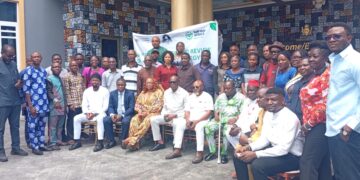
Speaking at the end of a two days Draft Presentation and Review of the WASH Financing Strategy, held at the Hogis Hotel in Calabar, the Commissioner of Water Resources, Bassey Mensah, expressed concern over the underutilization of over 200 water schemes across the state.
Bassey noted that many boreholes had been left idle due to inadequate maintenance and lack of reliable power.
“Inasmuch as water is not running in our communities, I cannot rest. We cannot abandon existing water schemes for Abuja engagements,” he said. “Some of these projects, including EU-funded schemes worth over $1 billion, have been underutilized. Our focus is to convert these idle schemes to solar power, particularly in schools and rural communities, to ensure they serve the people as intended.”
The Commisoner also highlighted the government’s commitment to gender-inclusive initiatives, noting that female schools would be prioritized in the upcoming projects.
“We want to go to schools, especially female schools, and ensure that whenever girls have challenges, they have access to water. By doing this, we also improve attendance and health outcomes,” he said.
Addressing the meeting, Charles Abiola, Managing Director of Ekondo Microfinance Bank, said private sector participation is critical for sustainable WASH financing. He recounted the bank’s collaboration with Water.org and other partners to develop WASH-focused financial products.
“We finance businesses related to water treatment, sanitation, and hygiene. It’s not just about what we can gain as a bank; it’s about the well-being of our customers and their environment,” Abiola said. “Cross River State is leading in adopting the WASH project, and we are committed to partnering fully to make these initiatives impactful.”
Also speaking, Emmanuel Ami-Okhani of In-line Informatics Limited called for a more inclusive approach to WASH financing. He stressed that beyond government officials, the strategy must involve banks, microfinance institutions, water service providers, and other stakeholders.
“Any WASH financing strategy that is not plugged into the market risks being unsustainable. It’s the people paying for services who sustain operations. We must bring in experts and practitioners to make the strategy realistic and actionable,” he said.
The meeting concluded with a consensus on rehabilitating abandoned water schemes, converting them to solar-powered systems, and creating financing models that ensure long-term sustainability for WASH services across the state.
The Officials said the collaboration between government, private sector, and development partners would be critical to achieving these goals.
