

By Asuquo Cletus
Stakeholders from communities across Cross River State have called for stronger grassroots-driven strategies, improved access to water, and sustained government support to eliminate open defecation in the state.
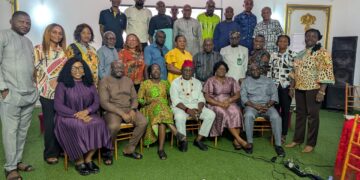
The call was made during a two-day Basic Sanitation Access Roadmap Draft Review Workshop held in Calabar, where traditional leaders, government officials, and development partners reviewed progress and challenges in the state’s sanitation sector.
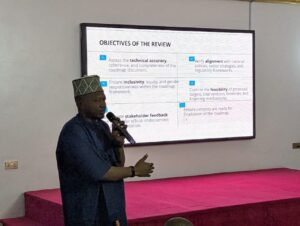
Speaking at the workshop, a community leader from Abi Local Government Area, Chief John Nkanu Ivon, emphasised that access to water remained crucial to achieving sanitation goals, noting that hygiene practices could not be sustained without a reliable water supply.
He lamented the decline in water infrastructure across the state, recalling that in the past, potable water was readily available in many communities.
“You cannot preach hygiene and sanitation when there is no water. Water solves most of the problems. In those days, water flowed across communities, but today, many areas lack access,” he said.
Ivon noted that some communities had taken proactive steps by constructing and managing public toilets, while also setting up local task forces to curb open defecation.
“In our community, we built shared toilets and introduced a system where users contribute to maintenance. We also have youth task forces that monitor and enforce compliance. But we need more support, especially in providing water and fixing non-functional boreholes,” he added.
He further urged local government authorities to lead by example by ensuring that council headquarters are equipped with functional water and sanitation facilities.
Also speaking, the South-South Zonal Coordinator of the Clean Nigeria Campaign, Susan Offiono, commended Cross River State for its early leadership in sanitation, noting that it was the first state in Nigeria to achieve an Open Defecation Free status in a local government area.
She, however, observed that progress had slowed in recent years and called for renewed commitment to sustain and expand previous gains.
“This roadmap provides an opportunity to reflect, refocus, and accelerate efforts. We must strengthen collaboration among the state, local governments, communities, and development partners to ensure that no community is left behind,” Offiono said.
She also lauded the state government for demonstrating political will through the release of counterpart funding for sanitation programmes, particularly in Obubra, describing it as a positive signal to stakeholders.
Chairman of Yala Local Government Area, Dr Fred Okem, highlighted the strong link between sanitation and public health, noting that improved hygiene practices would significantly reduce disease burden across communities.
He expressed optimism that the workshop would strengthen ongoing efforts and enhance coordination among stakeholders in the sector.
Participants at the workshop emphasised the need for increased investment in water, sanitation, and hygiene infrastructure, continuous community engagement, and regular monitoring to sustain Open Defecation Free status.
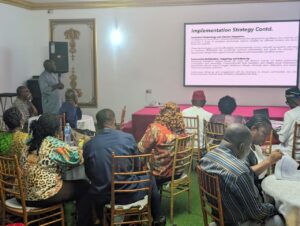
They also advocated community ownership of sanitation facilities, stressing that local involvement in planning, implementation, and maintenance would ensure long-term sustainability.
The workshop concluded with a renewed commitment by stakeholders to prioritise water access, strengthen local enforcement mechanisms, and scale up community-led initiatives aimed at ending open defecation across Cross River State.
