

By Nakanda Iyadim
Cross River State has recorded a landmark victory in public health, reporting a nearly 50% drop in Soil-Transmitted Helminth (STH) and a massive 76% decline in Schistosomiasis (SCH) over the last decade.
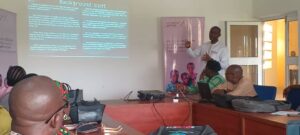
The results were made public on Tuesday at the Essential Drugs Complex in Calabar during an Impact Assessment report presentation.
The initiative is a joint effort between the Cross River State Government, the Federal Ministry of Health, and Evidence Action Nigeria.
Data-Driven Success
Toochi Ohaji, Senior Programme Manager at Evidence Action, presented data showing that the State’s baseline prevalence for STH has fallen from 24.5% to 12.59% as of 2024. Akamkpa LGA led the progress with a 62% reduction in infections.
The progress regarding Schistosomiasis was even more significant, with the Statewide prevalence dropping from 5.7% to 1.42%.
“This is a momentous achievement,” Ohaji said. “The resources and investment poured into this programme are yielding real results. Seeing the burden of these diseases lift across Cross River brings immense joy to all stakeholders and donors.
The success was achieved despite significant cultural barriers. Ohaji recounted how health teams had to combat dangerous misinformation in rural areas, where rumors suggested that stool samples were being collected for rituals.
“We saw parents rushing to schools to pull their children out, because of the rumour of using their faeces for rituals ” Ohaji noted. “It took high-level advocacy and the direct intervention of traditional leaders, particularly a Paramount Ruler in Northern Cross River, to dispel these myths and allow our teams to work.”
He noted that While the medical intervention (deworming) has been successful, the report highlighted a critical need for better infrastructure. A survey of over 2,000 pupils revealed that 14% of pupils still practice open defecation , 40% of schools lack toilets entirely and that Of the schools that have toilets, 43% are in poor condition and 52% lack running water.
Referring to the World Health Organization (WHO) guidelines, the lead resource person said that, “elimination” is defined as a prevalence rate below 2%. While Schistosomiasis has reached this threshold, STH remains at 12.6%, adding that the team is now shifting focus toward the 2026 treatment cycle, emphasizing that medical treatment must be paired with improved water and sanitation (WASH) infrastructure to ensure the gains are permanent.
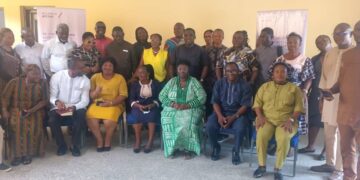
The dissemination event was attended by, Mrs. Imaobong Umah (National NTD Programme Manager), Pastor Veronica Mark
Director, SNTDC, Dr. Jonah Offor (represented by Patrick Odu of the Ministry of Health), and representatives from the State Ministry of Education and the Primary Healthcare Development Agency, society organizations, media and other critical stakeholders.